Monday, February 22, 2016

Day 28-30: THe PLUNGE (part 1)

Saturday, January 30 - Monday, February 1
(I'll try to keep these next posts brief so I can catch up to February, we'll see how that works out!) (It didn't work out.)

We left Xela, our home for most of January, on a Saturday morning. Emily and I either pretended not to cry or pretended not to notice the tears of others while we said goodbye to our host mom. The 10 block walk to el parque central didn't seem that long before, but when we were loaded like mules it sure did. We had just passed the school and met up with a few other CASPmates when the family car pulled up behind us with Simon driving and Emi in the passenger seat! Emi can't drive and Juan José had taken a bus to work, so she enlisted Simon's help. 6 of us piled our backpacks into the trunk and backseat, leaving enough room for one person to squeeze in (me!) with the rest walking unencumbered. While it was wonderful not to have to carry our heavy packs the last 5 blocks, it meant we had to say goodbye again. UGH.

We joined with the rest of our group under the statue of Justo Rufino Barrios, where we were to embark on THE PLUNGE. This was the part we didn't tell our parents about before we left for CASP. The Plunge is a good, character building tradition in which we students are divided into groups of 3 or 4, handed an envelope with some cash and the name of a pueblo, and told to get lost. The rules: don't use technology to find directions, don't cross any borders, and don't go to Guatemala City. On Monday we would meet back up at a hotel in Antigua. 


I was with Anne Marie, Jessica, and Grace. Our town was Nebaj, in the department of el Quiché. After a few minutes of dithering to use the bathroom and get coffee, we set out to find a microbús to the bus station. Now, bus stops aren't usually labeled in Guatemala. The city buses are vans that maneuver frighteningly fast through the narrow streets with as many passengers as possible crammed inside. They're not hard to find because each bus has an assistant who hangs out the door and shouts at passersby to get in. The first person who we asked for directions ushered us to a nearby street corner and sure enough, within 3 minutes the right bus came.

We got off at the bus station and ran around confusedly at first. The "station" was just a street next to a crowded market with a lot of Durham buses coming and going. To catch a bus to el Quiché we had to cross through to the other side of the market. There's one thing that I regret not taking pictures of, and that's the markets. They're fascinating and claustrophobic places, and going through one with large backpacks is not easy. 

Well we made it through the maze and emerged in a dirt lot full of pimped out school buses. I'm talking flames on the side, blinking lights, "DIOS ES AMOR" emblazoned on the windshield in a monster-truck font, and stickers of busty-girl silhouettes. We were overwhelmed by the chaos: there were no signs, no information desk, just a lot of roaring chicken buses and people running every which way. Before we even had time to assess our surroundings, a man asked us where we were going, then grabbed one of our bags and ran off. We could only run after him. Our backpacks were thrown on top of a bus and so we found our ride to el Quiché. 

As the bus lurched out of the city we were joined by numerous salesmen who delivered speeches resembling infomercials praising their wares. They'd hop on when the bus stopped and hop off a few blocks later. We were a captive audience, forced to listen to speeches about everything from chocolate to eucalyptus leaves to needle-threaders. 

It was 3 hours from Quetzaltenango to el Quiché, the capital city of the department of the same name, where we would take another bus to Nebaj. All the school-buses were imported from Mexico or the United States, and I wonder if they beef-up the engines or if we just didn't make use of their full power on field trips back home, because these monsters eat up the road and it is scary. These were windy mountain roads, and we were passing cars on blind corners and being thrown out of our seats and not slowing down for anything. All set to energetic Mexican music blasting out the back speaker. 

At the bus station in el Quiché we encountered a problem. Like before, we told a bus assistant where we were going and he rushed off with our bags, but 2 of our bags were thrown on the wrong bus and it started driving away. Jessica and I were in the bathroom while all this was happening, but Anne Marie and Grace got it sorted out with some good use of the imperative mood. 

Onto another microbús for 2 hours of carsickness and admiring the landscape, and we arrived in Nebaj. Our next steps: find a cheap hotel to dump our stuff and find food. We found a place for 50 quetzales a night per person (that's $6.50), and we got exactly what we payed for. There was free agua pura, a TV, and no bed bugs, but that was it. To our annoyance, our room was above a busy street with lots of noise at 5am and at 10pm, when heavy shop doors slammed shut. 


Here we are with all our heavy stuff.


The city of Santa Maria Nebaj, population 79,000, is located in the northern mountains of Guatemala. A plaque in el parque central boasted that Nebaj is home to the most beautiful traje típico in the world. Almost all of the women, of all ages, wore bright red skirts either with a huipil (the traditional blouse) or a t-shirt.

The parque central is dominated by the facade of the Catholic church, which is overflowing during the weekend masses. One of our tasks was to talk to a priest, because they know the history of their parish. This proved difficult to accomplish because Saturday evening they had mass, and Sunday they had 3 masses. We finally got an interview with Padre Diego on Monday morning.


When we finally did get to talk to the padre (there was a sick, annoyed secretary in our way), we learned about how the Catholic church was involved in the healing process of Nebaj, and all of Guatemala, after the civil war. The whole department of Quiché was hit the hardest, and Nebaj especially so. During the worst years of the war entire villages of indigenous people were slaughtered by the Guatemalan army. In Nebaj the population is largely indigenous; we noticed that most people spoke Ixil and knew Spanish as their second language. The guerrilla forces were hiding out in the mountains near the pueblos, and the army wanted to stamp them out. The civilians were accused of helping the guerrillas, or of helping the army, and were caught helplessly in the middle.

Padre Diego described how the church has been working to collect accounts of the war to keep a record. Ten years ago someone set the building on fire to destroy the records, and they were only able to save a few binders. They also have voice recordings that they are working on transcribing. The church has a radio station that has programs in Spanish as well as Ixil, and there are masses in Ixil.

One example of the practical, dirty work the church did was to help exhume mass graves to identify victims and give the bodies back to their families. Can you imagine your pastor asking your congregation to go out with shovels and exhume graves? Not give money to the cause -- they didn't have money to give -- but actually do it themselves?    


The mural next to the church. It depicts the conquest in the top left corner, and a scene of peace on the right. A monk is over there with the conquest, but he doesn't look happy with the way Spain is doing things. The woman in the center, who is labeled "Nebaj," is holding water and corn. "Nebaj" is an Ixil word meaning "birthplace of water." The three other women have names in their hair which are the origin places of the Ixil people.


Sunday morning we wandered around the dense, busy market that had taken over several blocks that had been empty the day before. Once again I lament that I didn't take any pictures. We found breakfast, bread and fruit, and our souvenir to share with the rest of the group. Walking proved dangerous as there were tarps hung up for shade, with the cords stretched out above the heads of the average Guatemalan but right at choking level for us.

Grace spotted an open doorway between two fruit vendors that led into a quiet mall in the middle of the busy market. Here they sold all kinds of woven fabric and traditional clothes. Anne Marie chatted with a woman who ended up dressing us all up in the Ixil variant of the traje tipico and telling us her life story.


She even did up Anne's hair.


We mostly only saw old women wearing the hair pom-poms, but as I said before, everybody wears the bright red skirt.

The woman described life in Nebaj during the war: they were afraid to go outside after 5pm or use lights because they would be shot in their houses. Many people disappeared or were tortured. Her father was tortured and killed, but they don't know which side did it. She made it clear that both the Guatemalan army and the guerrilla forces terrorized civilians. The town shrunk because people fled to Mexico or to the cities where it was a bit safer. When the fighting was at its worst she and her husband moved to Guatemala City where they lived for 5 years. Even there they had problems. No one would hire her husband because he was indigenous, so she sold street food to provide their income. She didn't know any Spanish then, only Ixil, but she learned. Because she wore the traje tipico she too faced anger and hatred from ladinos who thought Indigenous people were on the side of the guerrillas.

Once she was on the street and a ladino woman pushed her (or they bumped each other accidentally, not sure) and then shouted "Guerrilla! Guerrilla! That guerrilla pushed me!" Our friend the saleswoman was petrified. She thought she would be killed.          

We asked why she continued to wear the traje tipico in Guatemala City, since she was discriminated against because of it. She said it was what she had always worn, and what she was comfortable in. How could she wear anything else? Then we asked what she thought of foreigners like us buying Ixil clothes and wearing them, even though it isn't our culture. She said she was proud that today foreigners think Ixil traje tipico is beautiful, and that if you like something you should wear it.


Anne Marie, Jessica, and Grace all dressed up.


Wednesday, February 10, 2016

Day 1-28: Mi familia guatemalteca

January 3-30

If you ever want a really awkward experience, try living with a family without fully understanding their language. They're going to do weird things, like put ketchup on all their food and never wear seat belts, but they're going to think you're pretty strange too because you don't know how to operate a shower faucet. Once you get past the first few days of not remembering your mom's name or how to get home from school or to put the toilet paper in the trashcan... well, once you get past that first week you'll probably continue to do things wrong or say things that are funny but you don't know why they're funny. It's a lot of fun, trust me.

My family in Xela was small, only Emilia (Emi for short), her husband Juan José, and their daughter Ana. Some confusion followed because my roommate's name was Emily, and the "H" in my name is optional. They're really fun people, and have hosted a lot of foreigners. Emi and Juan José loved looking at photos of Spokane and our families and learning about the United States. 

All the houses in Guatemala are walled in. I find this slightly ironic because Latinos are supposed to be more social, more connected with their families and the people in their communities. And they are, but they don't do the rocking chairs on the front porch thing. They go to family parties late at night with loud marimba music and dancing, and then somehow wake up at 6am to do it all over again. Although I like front yards and porches, I also really liked the houses in Guatemala. They're bright and colorful, and it just looks cool. 


This was my street, barely a 10 minute walk to our school. Our neighbors had dogs on their roof that scared Emily and me the first time we walked by.


In the middle of the day the metal door was really hard to open because it expanded. This is our host sister, Ana. 


Emily taught Emi how to make banana bread, and she LOVED it. Later I made a chicken pot pie with her, which I had serious doubts about, but it turned out to be delicious.


One evening we had our friend Karli come over to teach our family country swing dancing. Emily and Karli are both pretty fantastic at it. (This was at the end of January, and the overwhelming Christmas decorations are still up.)

In the last week, we got a new host brother, Simon from Switzerland. We played a lot of card games with him and had fun trying to pronounce the German words on his Spanish flashcards.

On the last night Emi dressed us up in her and Ana's traje tipico. Each department in Guatemala has its own indigenous culture(s) with their own unique traditional clothing. Depending on the place, everybody wears the traje tipico or only the old people do. In the department of Quetzaltenango, which is 25% K'iche', a lot of women wear the traje tipico but none of the men do. And a lot of people only wear it for special occasions. These dresses are really expensive and take up to 5 months to weave and embroider by hand. Emi said the men's traje is even more expensive, which is why they never wear it out and about except for special occasions.

The women's traje tipico is made up of a huipil, which is a heavily embroidered shirt, a skirt which weights about 50 pounds, and a belt cinched tight so you can't breathe. There's also a long piece of cloth that can be worn as a scarf, folded over your shoulder, to carry on your back, folded on your head to keep the sun out of your eyes... I don't remember its name, but it's very important that you fold it right.


Emily, Simon, and me. Simon is wearing Juan José's traje tipico shirt over his two shirts. The pants were a little short.


We went to Emi's parent's house to show off our new outfits. They live within walking distance, along with various other relatives that I can't keep track of. A few nights a week Emi and Juan José go over to have dinner with them and "work." This mysterious work, we found out two weeks in, is grinding meat to make hot dogs. Emi's mom sells hot dogs in the market. That explained why there were hot dogs in our spaghetti one dinner. 

The abuelos' house is also full of Christmas decorations, and really loud marimba music. The whole family would sits around a looooong table and eat and makes merry until Emily and I were falling over because it was past our bedtime. One kid, Ángel, who I'm guessing was very autistic, liked to dance. He'd go up to people and grab their hands wanting to step to the marimba music.


And here Ángel looks like a zombie.


Mi familia guatemalteca. I didn't know them for very long, but I already miss them.

Monday, February 8, 2016

El Cementerio en Xela

Xela's public cemetery is more alive than any cemetery in the United States. Every weekend the square outside the walls is packed with venders selling massive bouquets of flowers and families going to visit their lost ones. Latin America in general is more in touch with death than the U.S. I think part of it is that family connections are stronger, and they try to maintain that connection even after someone dies. 

Perhaps another contributing factor is that every country in Central America, with the exception of Costa Rica, went through a civil war in the last half of the 20th century. Brutal civil wars. In Guatemala many people don't like to call the 37-year long conflict a civil war because it was one-sided. It wasn't a war between two armies but rather a slaughtering and terrorizing of civilians. Yes, the guerrilla forces also tortured and killed civilians, but 90% of the atrocities committed from 1960 to 1996 were done by the Guatemalan army (The bishop Juan Gerardi, who was responsible for that report, titled Guatemala: Nunca Más, was assassinated a few days after it was published). So everybody older than 30 remembers the war, and had close friends and family members who died. 


The sign hanging in the entrance to the cemetery says "The memory of the living gives life to the dead." I think the people of Guatemala do live by that saying.


The most striking difference between U.S. cemeteries and Xela's is that the graves are above ground, and they're colorful. They make me think of shelves for caskets. The head stones (shelf stones?) tend to have whole poems or Bible verses written on them, not just names and dates. There are a lot more flowers too -- families visit graves regularly for years after someone has died.  


All that visiting means that, like the rest of Xela, there's a lot of garbage. Old flowers and ribbons get thrown on big dirt piles. As gross as all the litter and stray-dog poop is, there's something nice about it too. It means that this is a place for people, for alive-things.


Of course, some people get fancier graves than others. Some have statues on top, or busts of the deceased, or are mini-chapels. A few years ago someone smashed off the head of every angel in the cemetery -- only the angel of death's head was safe. My professor thinks it was satanists. Maybe it was just a group of dumb kids. Weird.


Some of the fancier, older graves had the caskets below ground. Here's what an open one looked like: shelves for everybody in the family!


A lot of the graves had chapels I could peer into.

And now! The legend of Vanushka! It's a long story that I don't feel like writing, fortunately Camina beat me to it. Read the whole legend here.

Probably the most famous tomb in Xela's cemetery is Vanushka's, a gypsy who died of a broken heart... or poison. Couples, distant lovers, and those seeking love write their names on Vanushka's tomb so the lady will help them. Her love story ended badly -- he married someone else and she killed herself -- but her ghost-spirit-whatever wants to help others avoid her sorrow.


Lastly, smack in the middle of the cemetery there's a big yellow wall. It's a monument to the fallen soldiers of the revolution of 1897. Remember how I wrote about Quetzaltenango trying to be it's own country, the sixth state of Central America? This is a monument to that struggle.


"The love of liberty made them heroes."


"The hatred of tyrants made them martyrs."

Sunday, February 7, 2016

Day 22: Weaving Lessons

Sunday, January 24

Momostenango, a tiny little town in the middle of the mountains. You have to take some very twisty roads to get up there. You have to go down some very steep stairs to get to Thelma and Luis' house, which is pretty much on the side of a cliff.


See these roofs? Their house is behind them, even farther down. 

Thelma and Louis, their children, and well, their grandchildren are too little, are all weavers. They do the whole process themselves, starting with these little guys:

   
While Don Louis talked to us about the process, Doña Thelma sat in the back with a basket of wool and two heavy-duty brushes. She used the brushes to make it nice and soft.


Don Louis then takes a handful of the brushed wool and uses the spinning wheel to make yarn.


We all took turns using the spinning wheel, with Don Louis guiding our hand. Their spinning wheel is.... he either said 50 or 150 years old. Not sure which, but either way it's pretty old.


These are all of the ingredients they use to make dyes. There's some bark, some flowers, and yup, even dead bugs. This family only uses natural dyes. 


Don Louis and his yarn of many colors.


Next we got to learn how to weave! They specialize in rugs, lots and lots of rugs, but they make other things too.


There are some really amazing patterns, like this one, still on the loom.

Thursday, February 4, 2016

Day 16: Maya Ceremony

January 18

Fun fact that I have not been paying attention to: Maya can be a noun or an adjective and refers to the people and culture. Mayan with an N is only used for the language. I'll probably continue to mess that up. 

A man came to Casa Xelaju to teach us how to perform a Maya ceremony. I didn't document it well and also it was a long time ago, so I apologize that this post won't be as detailed as I'd like it to be.


The Maya were polytheists, but I understand that they also believed in a creator god who was above the rest. Today there are indigenous people who continue to believe and practice the old religion, but the majority are Christians who retain, to some degree or another, Maya traditions. The question is, which traditions and ceremonies are compatible with Christianity and are just a different way of worshiping the same true God, and which parts aren't? For example, an outsider might assume that an indigenous person is worshiping the sun, or the rain, but the truth might be that they are giving thanks to God for providing the sun and rain.

The ceremony that we learned about (some students participated, some watched) is performed to give thanks to the creator god and to ask for continued blessings. It's a smaller version than what is performed in the mountains, since we didn't want to burn the school down.

First the man drew a circle in the dirt, starting from the north and going counterclockwise. No one was allowed to set foot inside the circle because the ground inside is sacred. Circles are a special shape in Maya culture, when one is drawn for a ceremony it's to ask permission of the earth... I'm not sure I understood the Spanish completely when he was talking so I think that's what it's for.

Next sugar was dumped on the circle, once again starting from the north and going counterclockwise. Then little coal-balls of pine and sap and other good smelling stuff, and incense like eucalyptus and myrrh. The whole group put down the ingredients together. The individual ingredients can vary, I think, depending on what you have. Last were candles -- a BUNCH of candles. Each color has a significance and is used to ask for a particular blessing/protection, which is super interesting. White, black, yellow, and red are arranged on their respective cardinal point, with light blue in the middle. I heard later that white, black, yellow, and blue are special because they're the four colors that corn come in.


With that done, it was time to light 'er up!


Dana was foolishly determined to get one tiny candle lit.

The last step was to throw alcohol on the fire, an offering that produced an awesome result.


Wooo fire! And I thought Catholic churches used a lot of candles.

Wednesday, February 3, 2016

Day 14-15: El Milagro de las Plantas y Lago de Atitlán

January 16-17 (Oh wow I'm really behind on this blog thing. And you don't want to know about my homework...

A few weekends ago we visited El Milagro de las Plantas (the miracle of plants) in Sololá. It's a small farming co-op that only grows plants native to Guatemala, doesn't use pesticides or chemicals (or anything ending in -cida), and uses traditional Mayan farming methods. Their goal is to be nice to the earth and to provide an alternative to the state health care system. Guatemalan health care is far too expensive for the average campesino, the nearest doctor is most likely located in a far away city, and is not always reliable. Hospitals are understaffed and underfunded, and a few years ago there was some scandal about hospitals using expired medicine. So... unless you're rich, not the best option. El Milagro grows herbs with medicinal uses and makes creams, soaps, teas, and everything else imaginable to sell to their community.  

We followed a young man, one of the founders of El Milagro, through the terraced garden on a particularly blazing day. He would pick off part of a plant, explain it's many health benefits, and pass it around for everyone to smell. As soon as we got the Spanish "romero" translated into English "rosemary" in our heads, he had moved onto the next plant and all was forgotten. 

He (grr I don't remember his name!) was very passionate about his work, and about sustainable farming practices. He used the word permacultura to describe their practices. "Permanent" not only means sustainable for the earth, but also in the sense that they are sustaining their culture by using traditional practices. They use terraces make watering easier, as well as prevent erosion of the hillside. They plant and harvest according to the lunar calendar, which doesn't make sense from my perspective but is still fascinating. Roots are harvested on a new moon, and flowers or leaves on a full moon. He didn't explain, but I think it's because the liquids in the plants will rise or fall depending on the moon. Like tides? It might be purely of a religious significance and not have any actual effect on the goodness of the harvest, but who knows? Maybe the Mayans were onto something.  

Here are some pictures. It's a very pretty farm, except for the dead corn in the background (it's left to seed).


After a bit of standing around in the sun, Katie announced she felt light headed and sat down. Two seconds later she fainted, very gracefully, into a bed of flowers. Our herb-guide shouted "ajo!" (garlic), snatched a piece off a nearby plant, and sprinted over to revive Katie with the strong smell. Her eyes fluttered open immediately. She was fine, she just had to be moved to the shade and be made to drink garlic tea (yuck?). The guide kept the garlic with him, and continued the tour. Not even fifteen minutes later, Grace fainted. She had been very interested in what the guide was saying, and was apologetic about passing out and missing it. Seeing that we were dropping like flies, it was time to end the tour.

We carried on to Panajachel, on Lake Atitlán, which is the most beautiful and most touristy place in Guatemala. We stayed at this hotel and got a lot of mosquito bites:


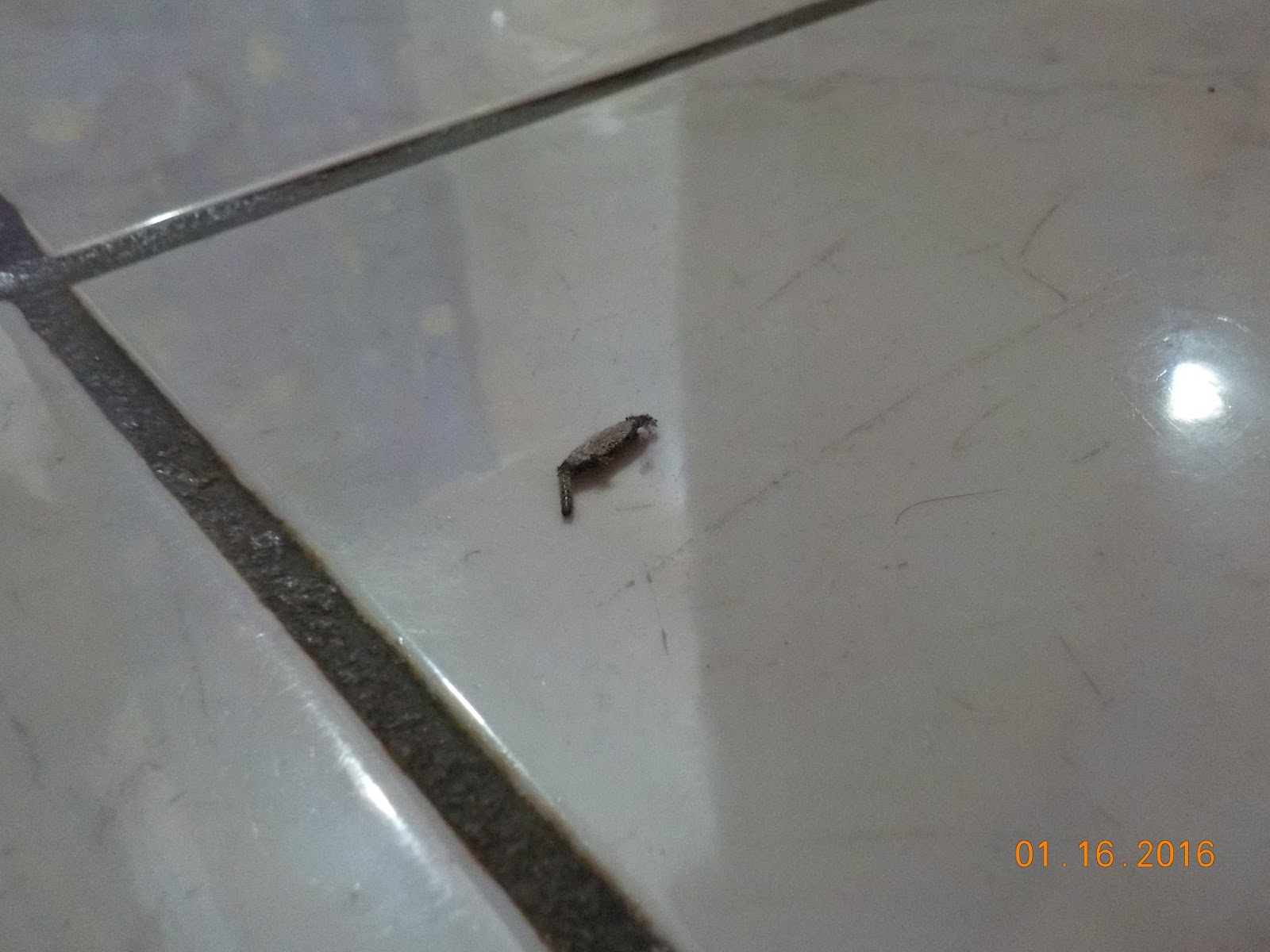
And there was this really creepy bug in my room and I don't know what it is and I didn't like it!

Now the lake. Atitlán means "beautiful woman" in Cakchiquel, and it certainly is a really really pretty lake. You should seriously go look for professional photos of it, like seriously. It's surrounded by high cliffs and, on the south, three gorgeous volcanoes.


The town, Panajachel, I was not impressed with. It's fullllll of foreign tourists and hippies and vendors. I have never encountered such aggressive salespeople! If you so much as glance at what someone's selling they will follow you, shouting prices at you. And fancier restaurants will hire boys to stand outside and wave menus at people to try to convince them to eat there. It's noticeably pricier than in Xela, of course, but still cheap compared to the U.S. Our host-mom warned us not to buy any souvenirs there because we could find the exact same things for less elsewhere. We did practice our bartering skills, which was a valuable learning experience.  
  

We took a boat across the lake to Santiago, to visit the chapel in memory of Father Stanley Rother. From Oklahoma, he served in Santiago as a priest for 13 years before being murdered by a death squad of the Guatemalan army in 1981. He worked closely with the indigenous people, he even learned their language, Tzutuhil, and was a friend to anybody -- Catholic or not. Well, in the middle of the long civil war, being a friend to the poor and to the indigenous was a dangerous thing to do. He knew he was going to be killed, many in his parish had already been martyred. The church converted the small room in which he was murdered into a chapel. It's a CASP tradition to buy stoles like the one Stanley Rother had and wear them to graduation, so we did that. They are beautiful, woven with multiple colors and cool designs in the indigenous style.


The Don Luises. Don Luis our bus driver, and Don Luis our prof (his real name is Lindy, but that doesn't work in Spanish).


I'll leave you with the volcano San Pedro, because volcanoes are fun and only a little bit scary.