Sunday, February 7, 2016

Day 22: Weaving Lessons

Sunday, January 24

Momostenango, a tiny little town in the middle of the mountains. You have to take some very twisty roads to get up there. You have to go down some very steep stairs to get to Thelma and Luis' house, which is pretty much on the side of a cliff.


See these roofs? Their house is behind them, even farther down. 

Thelma and Louis, their children, and well, their grandchildren are too little, are all weavers. They do the whole process themselves, starting with these little guys:

   
While Don Louis talked to us about the process, Doña Thelma sat in the back with a basket of wool and two heavy-duty brushes. She used the brushes to make it nice and soft.


Don Louis then takes a handful of the brushed wool and uses the spinning wheel to make yarn.


We all took turns using the spinning wheel, with Don Louis guiding our hand. Their spinning wheel is.... he either said 50 or 150 years old. Not sure which, but either way it's pretty old.


These are all of the ingredients they use to make dyes. There's some bark, some flowers, and yup, even dead bugs. This family only uses natural dyes. 


Don Louis and his yarn of many colors.


Next we got to learn how to weave! They specialize in rugs, lots and lots of rugs, but they make other things too.


There are some really amazing patterns, like this one, still on the loom.

Thursday, February 4, 2016

Day 16: Maya Ceremony

January 18

Fun fact that I have not been paying attention to: Maya can be a noun or an adjective and refers to the people and culture. Mayan with an N is only used for the language. I'll probably continue to mess that up. 

A man came to Casa Xelaju to teach us how to perform a Maya ceremony. I didn't document it well and also it was a long time ago, so I apologize that this post won't be as detailed as I'd like it to be.


The Maya were polytheists, but I understand that they also believed in a creator god who was above the rest. Today there are indigenous people who continue to believe and practice the old religion, but the majority are Christians who retain, to some degree or another, Maya traditions. The question is, which traditions and ceremonies are compatible with Christianity and are just a different way of worshiping the same true God, and which parts aren't? For example, an outsider might assume that an indigenous person is worshiping the sun, or the rain, but the truth might be that they are giving thanks to God for providing the sun and rain.

The ceremony that we learned about (some students participated, some watched) is performed to give thanks to the creator god and to ask for continued blessings. It's a smaller version than what is performed in the mountains, since we didn't want to burn the school down.

First the man drew a circle in the dirt, starting from the north and going counterclockwise. No one was allowed to set foot inside the circle because the ground inside is sacred. Circles are a special shape in Maya culture, when one is drawn for a ceremony it's to ask permission of the earth... I'm not sure I understood the Spanish completely when he was talking so I think that's what it's for.

Next sugar was dumped on the circle, once again starting from the north and going counterclockwise. Then little coal-balls of pine and sap and other good smelling stuff, and incense like eucalyptus and myrrh. The whole group put down the ingredients together. The individual ingredients can vary, I think, depending on what you have. Last were candles -- a BUNCH of candles. Each color has a significance and is used to ask for a particular blessing/protection, which is super interesting. White, black, yellow, and red are arranged on their respective cardinal point, with light blue in the middle. I heard later that white, black, yellow, and blue are special because they're the four colors that corn come in.


With that done, it was time to light 'er up!


Dana was foolishly determined to get one tiny candle lit.

The last step was to throw alcohol on the fire, an offering that produced an awesome result.


Wooo fire! And I thought Catholic churches used a lot of candles.

Wednesday, February 3, 2016

Day 14-15: El Milagro de las Plantas y Lago de Atitlán

January 16-17 (Oh wow I'm really behind on this blog thing. And you don't want to know about my homework...

A few weekends ago we visited El Milagro de las Plantas (the miracle of plants) in Sololá. It's a small farming co-op that only grows plants native to Guatemala, doesn't use pesticides or chemicals (or anything ending in -cida), and uses traditional Mayan farming methods. Their goal is to be nice to the earth and to provide an alternative to the state health care system. Guatemalan health care is far too expensive for the average campesino, the nearest doctor is most likely located in a far away city, and is not always reliable. Hospitals are understaffed and underfunded, and a few years ago there was some scandal about hospitals using expired medicine. So... unless you're rich, not the best option. El Milagro grows herbs with medicinal uses and makes creams, soaps, teas, and everything else imaginable to sell to their community.  

We followed a young man, one of the founders of El Milagro, through the terraced garden on a particularly blazing day. He would pick off part of a plant, explain it's many health benefits, and pass it around for everyone to smell. As soon as we got the Spanish "romero" translated into English "rosemary" in our heads, he had moved onto the next plant and all was forgotten. 

He (grr I don't remember his name!) was very passionate about his work, and about sustainable farming practices. He used the word permacultura to describe their practices. "Permanent" not only means sustainable for the earth, but also in the sense that they are sustaining their culture by using traditional practices. They use terraces make watering easier, as well as prevent erosion of the hillside. They plant and harvest according to the lunar calendar, which doesn't make sense from my perspective but is still fascinating. Roots are harvested on a new moon, and flowers or leaves on a full moon. He didn't explain, but I think it's because the liquids in the plants will rise or fall depending on the moon. Like tides? It might be purely of a religious significance and not have any actual effect on the goodness of the harvest, but who knows? Maybe the Mayans were onto something.  

Here are some pictures. It's a very pretty farm, except for the dead corn in the background (it's left to seed).


After a bit of standing around in the sun, Katie announced she felt light headed and sat down. Two seconds later she fainted, very gracefully, into a bed of flowers. Our herb-guide shouted "ajo!" (garlic), snatched a piece off a nearby plant, and sprinted over to revive Katie with the strong smell. Her eyes fluttered open immediately. She was fine, she just had to be moved to the shade and be made to drink garlic tea (yuck?). The guide kept the garlic with him, and continued the tour. Not even fifteen minutes later, Grace fainted. She had been very interested in what the guide was saying, and was apologetic about passing out and missing it. Seeing that we were dropping like flies, it was time to end the tour.

We carried on to Panajachel, on Lake Atitlán, which is the most beautiful and most touristy place in Guatemala. We stayed at this hotel and got a lot of mosquito bites:


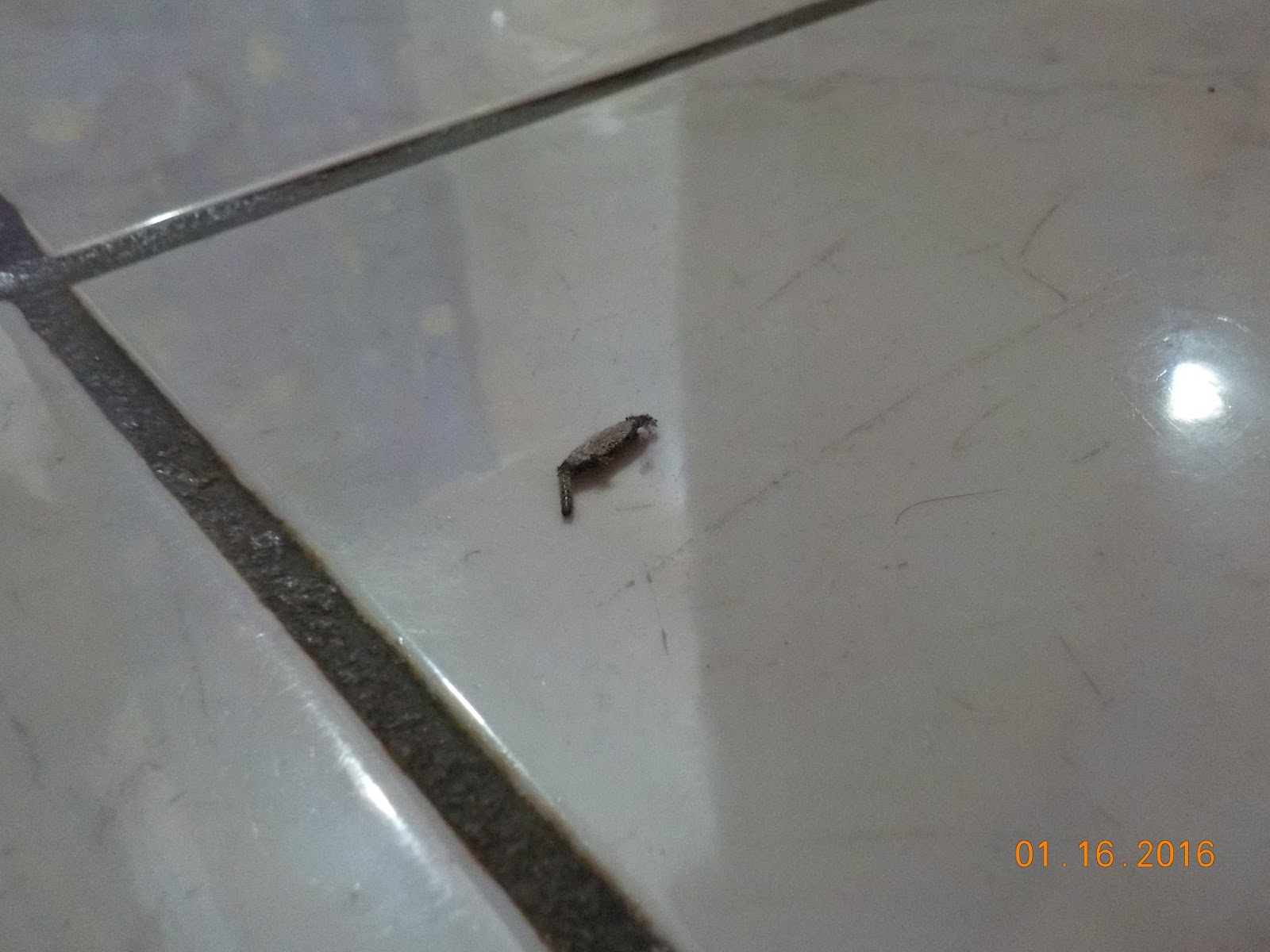
And there was this really creepy bug in my room and I don't know what it is and I didn't like it!

Now the lake. Atitlán means "beautiful woman" in Cakchiquel, and it certainly is a really really pretty lake. You should seriously go look for professional photos of it, like seriously. It's surrounded by high cliffs and, on the south, three gorgeous volcanoes.


The town, Panajachel, I was not impressed with. It's fullllll of foreign tourists and hippies and vendors. I have never encountered such aggressive salespeople! If you so much as glance at what someone's selling they will follow you, shouting prices at you. And fancier restaurants will hire boys to stand outside and wave menus at people to try to convince them to eat there. It's noticeably pricier than in Xela, of course, but still cheap compared to the U.S. Our host-mom warned us not to buy any souvenirs there because we could find the exact same things for less elsewhere. We did practice our bartering skills, which was a valuable learning experience.  
  

We took a boat across the lake to Santiago, to visit the chapel in memory of Father Stanley Rother. From Oklahoma, he served in Santiago as a priest for 13 years before being murdered by a death squad of the Guatemalan army in 1981. He worked closely with the indigenous people, he even learned their language, Tzutuhil, and was a friend to anybody -- Catholic or not. Well, in the middle of the long civil war, being a friend to the poor and to the indigenous was a dangerous thing to do. He knew he was going to be killed, many in his parish had already been martyred. The church converted the small room in which he was murdered into a chapel. It's a CASP tradition to buy stoles like the one Stanley Rother had and wear them to graduation, so we did that. They are beautiful, woven with multiple colors and cool designs in the indigenous style.


The Don Luises. Don Luis our bus driver, and Don Luis our prof (his real name is Lindy, but that doesn't work in Spanish).


I'll leave you with the volcano San Pedro, because volcanoes are fun and only a little bit scary.

Saturday, January 30, 2016

Day 28: Goodbyes

This morning we're leaving our host family to seek parts unknown. There was tearing up yesterday so I'm expecting a downpour from our host mom when we leave. It's incredible how important they've become to me after less than a month.

I'm really behind on this blog -- I've got a zillion photos to upload and we took a zillion more last night -- but don't worry, I'll catch up!

So yeah. I should eat breakfast and brush my teeth maybe. Also the straps on my backpack are ripping so I am a little worried about that, because it is definitely heavier than before with all the chocolate I bought!

Goodbye Xela.

Thursday, January 21, 2016

Day 9: Chocolate!

Monday, January 11

If I haven't mentioned it before, I should have: Guatemala has the best chocolate in the world. Like seriously, I'm going to cry every time I have a mug of hot chocolate in the United States because it doesn't compare to the magic that I drink here.

Last week we learned how to make chocolate by hand from Hannah H's and Grace's host mom and grandma. They also have machines that make it faster, but it's cool that they remember and share how to do it the traditional way. 14 of us crowded into the kitchen of Mira and her mother, Estela, which already smelled of rich, warm chocolate.


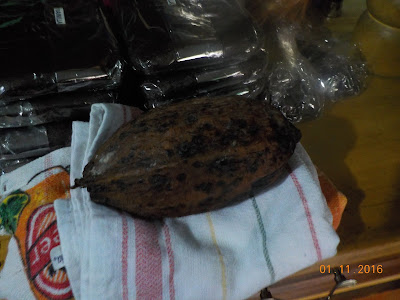
This is a cacao fruit. Not to be confused with coco, which is coconut, or coca, which is cocaine. 


A cacao bean. The shell is really hard to get open, and the bean doesn't taste much like chocolate at all. It's bitter and tastes like bark.

Estela roasted the beans over a hot, flaming stove. This makes the shells come off easily and the bean taste like chocolate.


Then we shelled the beans...


...and ground them up into a powder. Once a pile of chocolate was fine enough, Mira added handfuls of sugar and that mixture was ground together. Eventually, it turns into...


...this. Since cacao beans contain butter, the friction from the grinding stone turns the cacao into a paste. With solid sugar added, it becomes dough. Play-dough, actually. We got to make chocolate sculptures and sneak bits of dough into our mouths. This is the product Mira and Estela sell, with your choice of vanilla or cinnamon mixed in. Unfortunately, it's harder than a brick after it cools, so it doesn't make a convenient treat.  


The chocolate's intended purpose is to become a beverage. Guatemalan hot chocolate is made by dissolving a chocolate brick in hot water. That's it. You can ask for milk, but really, it doesn't need it.


That night my roommate and I tried to reproduce the magic hot chocolate with a microwave. We didn't know how to break the chocolate apart so we tried scraping it off with a knife. It wasn't very good. Later, our host mom showed us how to do it right. You just plop the whole thing in a pot of water and get it real hot, and stir it up. I guess the traditional Maya magic-chocolate just isn't compatible with microwaves.

Monday, January 18, 2016

Corrections

Shortly after my last post, my friend Camina (who also has a spectacular blog) told me I wrote "sunset" instead of "sunrise," and that "Indians" is not the right word to use. Every country has a different preferred word, it seems, for their indigenous population. There are the politically correct words, the words that the people themselves use, and it all varies from place to place.

In Mexico and Central America, it's "indigenous people" unless you want to use the name of a specific group, which is better. There are about 25 different indigenous cultures, all speaking different languages (of the Maya language family). Depending on which statistics you use, something around 50% of Guatemalans are indigenous.
 
I'm told that in South America they prefer "aboriginal." In the United States some prefer "Native American" and some "Indian," which is a bit confusing. And in Canada it's "First People." That's a lot of words of keep straight.

So I went back and changed some words, hopefully I didn't miss anything.

Thursday, January 14, 2016

Day 7: Another frikken mountain

Saturday, January 9. (How do you like the new fancy look? Nice, huh?)

Saturday morning, the one precious day of the week when a student can reasonably expect to sleep in, I was up well before the crack of dawn to seek adventure and really sore legs. My roommate and I went to the school at 3AM to meet the other students foolish enough to climb Santa María.


That triangle, safely in the distance where it belongs, is Santa María: whopping big volcano. It is the 5th highest mountain peak in Guatemala, and the 7th highest in Central America at 12,375 ft. (For perspective, Mt. Rainier has an elevation of 14,417 ft.) Santa María had been dormant for centuries until earthquakes started in January of 1902 and it exploded in October. It was one of the largest eruptions of the 20th century. 20 years later new eruptions began, and a lava dome formed in the crater from the 1902 eruption, on the south-west side. This side dome is called Santiaguito, and is still active today.

Quetzaltenango is at an elevation of 7,640 ft. That still leaves 5,000 ft to climb in one day. The idea of starting at 3 in the morning was to reach the summit in time to watch the sunrise and see lava glowing in Santiaguito.

We started out on a dirt road with a slight incline. We were a dozen students, our TA, 2 guides, the bus driver, and 2 policía to make sure we didn't get mugged. After only five minutes we norteamericanos were already panting for breath. I'm going to blame that on the elevation and lack of oxygen, and not on all of us being out of shape. For the first 2 hours we kept our headlamps pointed at the ground, watching out for horse poop and potential ankle-twisters. The scenery was lost to us, it was too dark to see anything. The sky gifted us with a few shooting stars, but for the most part we were too busy watching the ground to admire the ceiling.


Dawn crept up behind us, bringing with it morning fog that overpowered the lights of Xela far below.


At this point I really don't know how we're still smiling. Mountain climbing is hard work!


It gets cold at night, cold enough you need a coat, but it doesn't frost. As we climbed higher, however, tiny ice crystals crunched beneath our tennis shoes. After it melted in the sun it made for a slippery hike down.

We passed several rocks with the name Paco spray painted in orange. One rock said "fin." It lied. We were no where near the end. Eventually we did get there... and it looked like this.  


Somewhere out there by that line of clouds is the Pacific Ocean.


The summit is up there. After reaching the summit we spent an hour just below it, watching the smoking lava dome Santiaguito.

And then...


We interrupt this volcano to bring you... a dog. It probably has fleas. 


A picture of everybody taking pictures.


Aaaand me! Are you happy, Mom?


Me and my partner in class, Morgen. Santiaguito has settled down in the background.


And then it stopped being settled. That's two eruptions we saw! The second time was later in the day so there were a lot more people around watching. 

On the summit there were two Guatemalan brothers camping. They now live in the US, but they come back home to climb volcanoes. One of them talked to us about the surrounding mountain peaks, volcanologists, and some of the customs of the indigenous people. Santa María is a sacred place to the Maya; at the top we found bouquets of flowers left there by indigenous people. As the day wore on more and more people arrived at the summit, many of the women wearing the traditional Maya dresses. 

One consequence of this place being frequented by so many people, Guatemalans and tourists alike, is that even at the top of world there is so much garbage. The man we talked to said that even though the volcano is sacred to the indigenous people, it's mostly them who leave behind all the trash. Guatemalans in general are litterbugs, but the man thinks that the indigenous people don't have "a sense of the permanence of plastic" because, historically, all of their garbage was biodegradable. Corn husks and things like that don't stick around for centuries.


We arrived at the summit at about 8AM, after 4 and a half hours of climbing. After an hour's rest, we headed back down. The hill in the photo above is El Baúl, where our CASPmates who didn't want to suffer through climbing a frikken mountain spent their morning. Apparently, there are long slides at the top, and they brought pieces of cardboard to slide down on. 


In most of Latin America it is extremely rude to take pictures of people without asking, especially of children. In Guatemala's past there were people dressed as tourists who would take pictures of little children and then later those kids would be kidnapped. This father asked me to take his picture.

We passed a lot of people heading up the trail while we were going down. They wore ordinary clothes, as if climbing Santa María is an every day normal activity for them. Meanwhile we were carrying water, snacks, and sweat absorbing headbands and almost dying. As I said before, many of the women wore the traditional dresses. There were old men and women, sleeping babies being carried by parents and big siblings, and bouquets of flowers, all going up the mountain.


The lower elevations, which we were previously blind to at 3:30 in the morning, were lush and green. The first stretch of the trail is also used by farmers and their poopy horses.


Viewed from the beginning of the trail, that's the thing we climbed. I had an orange ice cream bar afterwards, and it was the best ice cream I've ever had.